How to Make Plant Fibre Paper Using the Fibre Fusion Technique
How to Make Plant Fibre Paper Using the Fibre Fusion Technique
When many people think of handmade paper making, they picture large vats of watery pulp, deckles, screens, and a lot of splashing water. While traditional hand-papermaking is a spectacular craft, there is another, deeply tactile method that allows for incredible precision, breathtaking translucency, and zero waste: the fibre fusion technique.
Often associated with silk paper making, this method can be adapted beautifully to work with 100% alternative plant fibres. By swapping out silk for processed plant tops and slivers, you can create a completely organic, sustainable, and archival paper surface that looks and feels like a crisp, non-woven textile.
Whether you are looking to create a structural base for free-motion embroidery, design a bespoke translucent lampshade, or permanently trap botanical elements in a frame, mastering plant fibre paper making opens up a world of creative possibilities.

Why Use Plant Fibres for Fibre Fusion?
While unspun silk roving is highly celebrated for its long, lustrous line, alternative plant fibres possess a rustic integrity and unique textures that silk simply cannot replicate.
In my studio practice at Wendy Ann Stanger Blooming Fibres, I love exploring how different botanical matrices react to the fusion process. Here are a few fantastic 100% plant fibres to experiment with:
- Linen (Flax) & Hemp: These produce an incredibly strong, crisp, and structural paper. Because the fibres are naturally robust, they provide a brilliant canvas if you plan to introduce heavy hand-stitching or freehand machine embroidery later.
- Bamboo & Cotton Top: These offer a cloud-like, bright, and brilliantly opaque finish. They are exceptionally soft to handle and absorb liquid mediums beautifully.
- Nettle, Mint, & Rose Fibres: For the ultimate eco-art narrative, working with these rare, alternative plant slivers infuses your handmade paper with a rich story. They yield deep, organic, and beautifully irregular surfaces.
The Secret Ingredient: Archival Cellulose Paste
In traditional textile arts, silk paper is often bonded together using acrylic mediums or fabric stiffeners. However, when working purely with plant materials, using a cellulose paste—specifically Carboxymethyl Cellulose (CMC) or methyl cellulose—is far superior.
Cellulose paste is completely acid-free, clear, and will not yellow with age. Most importantly, because it shares the same organic cellular makeup as the plant fibres themselves, it locks them into a cohesive sheet while allowing the paper to remain wonderfully flexible, soft, and completely natural to the touch.
Step-by-Step: The Plant Fibre Fusion Process
 What You Need:
- Your chosen 100% plant fibres (bamboo, flax, nettle, etc.)
- Prepared CMC cellulose paste (mixed to a smooth, clear, gel-like consistency)
- Two pieces of fine nylon netting (tulle or wedding veil mesh)
- A soft sponge or a wide, flat paintbrush
- Plastic sheeting to protect your workspace
 Step 1: The Multi-Directional Layout
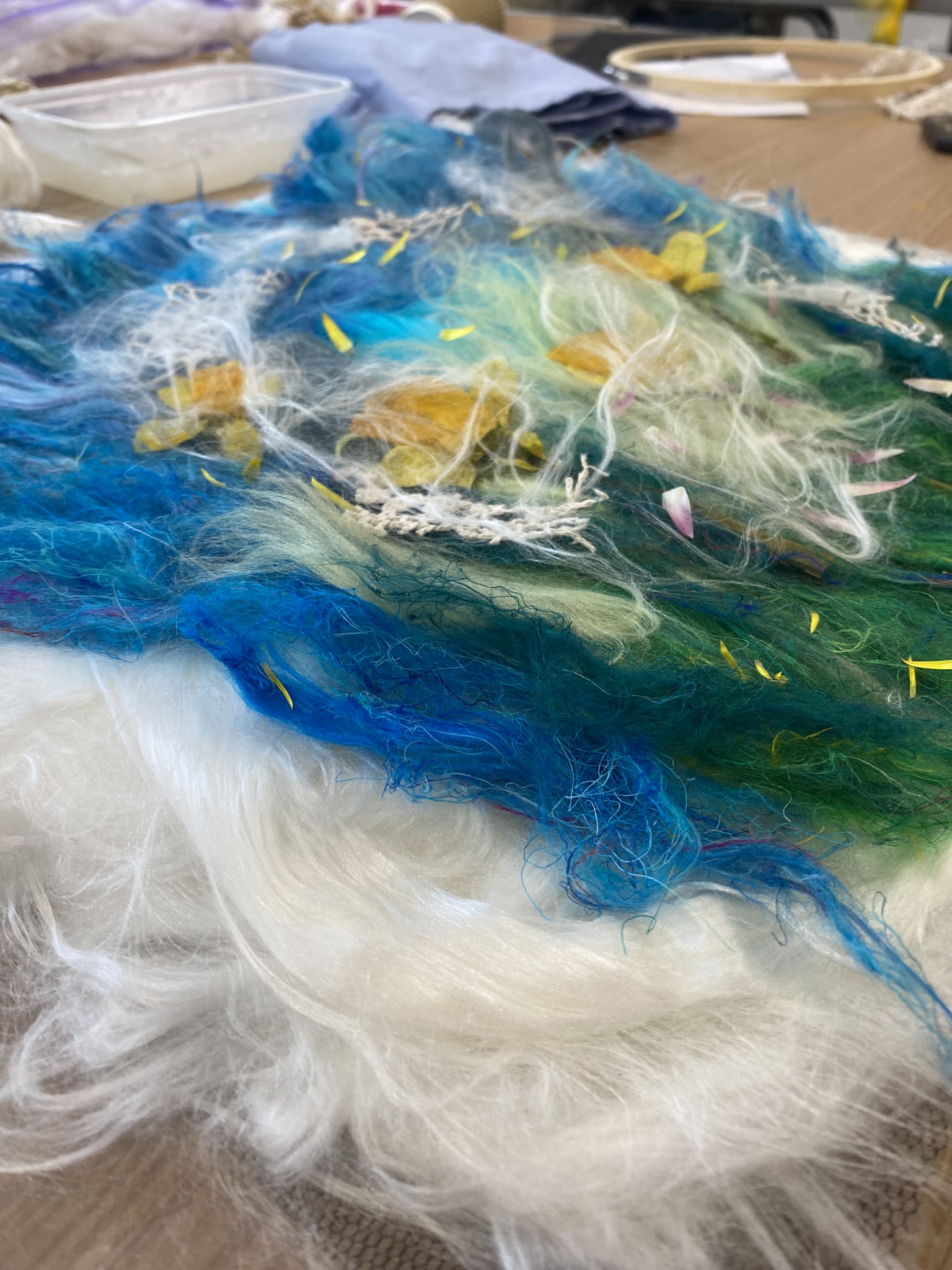
Spread your plastic sheeting out and lay down your first piece of nylon netting. Gently tease and pull your plant fibres into thin, wispy tufts. Lay down a thin, even layer horizontally across your mesh.
Next, lay down a second thin layer directly on top, but run these fibres vertically. This criss-cross action mimicking a weave is the vital structural secret—it locks the loose slivers together and prevents your paper from splitting or pulling apart once dry.
 Step 2: Applying the Cellulose Matrix
Place your second sheet of nylon netting gently over your fibre sandwich. Fill a spray bottle with warm water and lightly mist the top mesh; this breaks the surface tension and helps the paste travel through the layers smoothly.
Dip your brush or sponge into the clear cellulose paste. Dab and press the paste firmly straight down through the mesh. Avoid dragging or stroking your brush, as this will displace your carefully arranged layout. Ensure the paste completely saturates all the layers.
 Step 3: Squeegee and Dry
Take a dry, rolled-up towel or a clean sponge and press firmly across the entire surface. This squeezes out any trapped air pockets and removes excess paste, leaving you with a perfectly flat, compressed sheet.
Pick up the entire mesh-and-fibre sandwich and hang it up on a drying line.
 Step 4: The Reveal
Once it is 100% bone-dry, lay the sandwich flat. Slowly and carefully peel away the top layer of netting, and then the bottom. You will be left with a gorgeous, translucent, self-supporting sheet of pure plant paper. To finish, press it under a cloth with a warm, dry iron to achieve a crisp, flat page.
Take Your Fibre Journey Further
Learning the core mechanics of the fibre fusion technique is just the beginning. The real magic happens when you begin manipulating the surfaces—layering pressed, home-grown botanicals under a gossamer veil of fibre, or using the natural stiffness of the sheet to mold three-dimensional vessels.
If you would love to skip the trial-and-error and master this beautiful, sustainable craft with hands-on guidance, I would love to welcome you into my world. I run regular, interactive Plant Fibre Paper Making Workshops—both in-person at my open studio in Farfield Mill (located on the scenic Cumbria/Yorkshire border) or from my home studio nr Gretna also available online via live Zoom sessions for makers worldwide.
